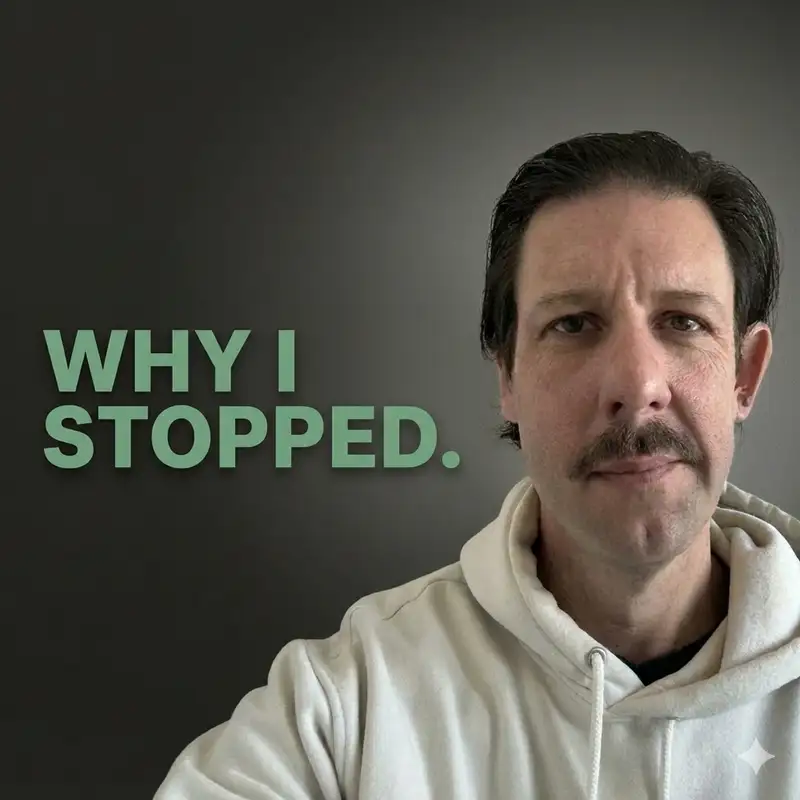
 Episode 3
· 25:28
(00:13.451)
you
(00:17.351)
here what's on your mind today let's go ahead and run back that last interview start to finish sure I'd be happy to revisit it do you want me to just summarize key takeaways or are you looking for a full replay of the questions and responses we had well what I'm gonna do is I want to go ahead and go through this live interview while I'm recording it on Riverside so yeah got it
be right here as we go along. Whenever you're ready to start, just let me know and we'll dive right into your questions and answers. Let's go. Alright, let's do this. I'm ready to follow your lead. Ask away when you're set and we'll keep the flow going as naturally as possible. No, no, no, no, no. You're the one that's asking me, remember? Of course. I'm the interviewer. Let's kick it off. To start, what's the core challenger idea you've been wrestling with this week?
So one of the things that I have increasingly talked about as we have started to roll out the early episodes of this podcast, the Ground Control podcast has been needing to create this blend of, you know, like my consulting and my coaching, but also doing stuff of pushing myself increasingly to learn new skills, to learn new tools and to figure out how they all fit together, both for my own private
projects but also for the work that I'm doing for my clients and this week and last week I would say really set the the bar high for what that actually meant and and what I mean by that was last week I I for went Publishing a podcast and I and I didn't publish the weekly newsletter
And that was because this whole new kind of AI storm took the world by storm. it's something, was, five days ago it was called Claudebot, C-L-A-W-D bot, and now it's called Moltbot, M-O-L-T bot. And it is this new, I don't know, this new agentic portal through...
(02:35.404)
like locally hosted LLM tools that really is changing the game and it captured my attention in a really profound way and I wanted to figure out how to work with it but also at the same time I knew that I really needed to like record this episode and do all the things and I caught myself in the middle of the two where
I wasn't sure which to do and I really wanted to throw myself head first into learning about this new system, even though it was very, very intimidating because, and I've talked about this a lot before, like I'm a non-technical founder and it's not hyper-technical. You don't have to be an absolute genius with...
with code and technology to be able to do this. But for someone who was coming from a non-technical background, it was intimidating. So I was kind of like sitting on the fence of like, should I do this or should I not do this? And I ended up really just punting the work and the episode of the podcast that I planned to do last week because my mind was blowing up with the potential and the opportunity.
of this next phase of what learning new tools meant for how they would be integrated into the podcast, into the work that I'm doing with Ground Control.
That's a fascinating crossroads. So what did you discover about yourself in that moment of choosing to dive head first into something new rather than sticking to the original plan? So what I figured out in doing that is one, that I'm getting smarter. Maybe I'm not getting smarter, but I'm learning that I am actually very capable of pushing myself and I'm very capable of learning to deploy these new things. And, you know, whereas
(04:41.611)
Three or four months ago, the idea of opening up a terminal or opening up something like VS code to be able to go in and actually work with real code was very, very obtuse for me. And I'm still very far from an expert at it, but I understand it as a mechanism and as a tool and the role that it plays in terms of allowing me to have access. you know, like while I didn't master it,
step by step, it's made it make more sense for me. In the same regard, last week I finally started working with Claude Code through the Claude Native app. And while I had been working with Claude Code and other aspects and using it in VS Code before, it was the first time that I was able to do so through their portal, which is great because the Claude Code kind of co-work portal
it simplifies and rounds off the edges of some of that difficulty of working in the terminal or working in something like VS code, but it doesn't completely remove you from needing to do that. And even inside of Cloud Code, there's this opportunity to still open up terminal or to still open up VS code to confirm things that are going on. And without knowing how to poke around in there, I wouldn't be able to be as...
effective and useful inside of quad code in that same regard when it came time to start understanding how to provision moltbot, it would have been far harder had I not been tinkering under the hood up until that point with some of this other stuff. So it just goes to say like it's not it's not perfect, but they're building blocks that are in place. And as I slowly figure out these building blocks, they're allowing me to do more stuff.
And as I'm stacking these building blocks, I'm learning all of this, you know, like applicatory knowledge that for me, I never learn about things or I never think about single ideas inside of a vacuum. I am always thinking about them and maybe I'm exploring them and thinking about them through one specific lens of my life. Maybe it's a specific client, maybe it's one of my side projects of which there are too many.
(07:04.84)
But what ultimately happens is while I will use a specific vehicle for entertaining and exploring that idea in the moment, in a very short period of time, once I get it, once the synapse fires and the core idea of what I was investigating settles in, I immediately start to think across the entire spectrum of things that I'm working on. I think about the entire spectrum of clients that I'm working on and projects that they have.
and problems and holdups that they're having in that moment, right? And then I think, oh, how does it apply here? How does it apply there? And that broad spectrum of inference with a new concept or a new idea is such an extremely rich moment for me. And it really does, it enriches...
and adds like a whole new palette of texture to everything that I'm working on. It never ceases to amaze me how profound digging into things can be and how profound all the other things that you are already doing become in light of something new that you've learned.
It sounds like this curiosity driven learning really fuels your entire ecosystem. So going forward, how do you plan to balance this constant exploration with the commitments you've made to your clients and your content schedule? Well, mean, so for this weekend, I, you know, every weekend I roll into the weekend with this long list of things that I want to do. You know, like I have, I have a bunch of heavy hitting clients that monopolize.
the large majority of my time during the week. And I've got a lot of other projects and side things that I work on that I always kind of earmark either for the evenings or frankly getting up early in the morning and working through them or the weekends. And this weekend, what I did was I really committed myself to exclusively getting through the motions of figuring out this mole pot thing and
(09:23.507)
Part of the reason behind that was I knew that if I learned it and I figured out how to use it, that I would be able to apply those learnings to all of the projects that are on my plate. the hypothesis was two things. One, I knew that if I were able to do that, that it would allow me to better manage my projects and my clients so that way I could be more present for all of them. And two,
I knew that it would allow me to do better work on their behalf. And I've got a broad set of clients that I do different things for some of them. Some I help with digital services. Some I'm more of a consultant and a coach. Some I'm doing full stack marketing and sales enablement. And I knew that by dedicating myself to this specific effort in this moment that
I was that much more likely to do great work for them when Monday rolled around. And I think that that's going to continue to bear itself out. I think that the smarter I get, the more I am able to accomplish on my client's behalf. And I'm still very much dedicated to having as much of a solopreneur ecosystem as I possibly can because I really thrive in being able.
to have that autonomy to figure out what I want to work on and what's lighting me up.
It sounds like your focus on learning is also fueling your client work, which is a great feedback loop. So as you continue building this solopreneur ecosystem, what's one specific goal you're setting for yourself in the next couple of weeks to bring all these pieces together? And, know, I think that like if there's one specific goal that I'm setting for myself over the next few weeks, one is to not say yes to anything else. I've got my plate very full at the moment.
(11:23.972)
And it feels really good. What I really am committed to doing is to sitting with what I currently have, which is going to be difficult because quite frankly, the interest continues to roll in. But I'm finally at a place where I have more than enough for what I can currently do. But I don't think that that
needs to stay that way as long as I take the time and I put in the work to really create systems and to really create schedules that will allow me to thrive in serving all of my client base that will allow me to continue to listen to and hear new conversations, to meet new people and hear the things that they're struggling with and be able to address them. I think if I don't
If I don't and if I didn't take the time to really break this thing kind of back down and start to arrange it with a really useful and utilitarian system that I would end up doing poor quality work that would continue to diminish in its effectiveness. And I think that I would end up feeling very
alone and I'm probably frustrated and sad and all of those things about how everything is shaking out for me. So really it's a huge portion of discipline that I am committed to applying to myself because this is something that I've been working very hard to get to for a long time now and now that I've gotten here it's my responsibility to
put the things in place to defend it and to shore it up and to make sure that it can sustain and continue to grow and continue to be a vehicle to allow me to do meaningful work that continues to stoke my curiosity.
(13:35.418)
that's a solid goal, honoring the balance you've built while creating structure that lets you thrive. I'm confident that focus will keep both your curiosity and client work in
(13:51.887)
Come on, give me some more questions.
Absolutely, let's keep the momentum. Reflecting on where you are now, can you share a recent moment where you realized your approach to balancing all these projects has evolved from, a year ago?
You know, one of the things that I realized recently was that, and you know, like we could talk about where I was a year ago, but I don't think that that's really fair because a year ago, I just had two or three clients and they weren't taking all of my time. I had more than enough time. I had a surplus of time a year ago. But I think that if we were just to go back, you know, like let's go back four months, you know, let's go back to...
October of 2025 and where I was then, which was a pretty significant client load with also a handful of like a la carte projects that were coming in, right? So a lot of sustained client work where it's happening on a daily, weekly, monthly basis. And it's there, right? Week after week, month after month. There's that basis level of my work that was happening. And then the other side of it is a lot of
Um, lot of all the cart projects that are coming in, um, whether it's doing some web design or it's helping people build outbound, uh, sales prospecting, uh, sequences, it's helping people, uh, to, to write some content that is representative of their brand and what they're trying to do. And, um, so I would say that for three or four months ago, um, the craziness in my head was not insignificant because I was really learning how to juggle.
(15:36.405)
so many different projects and it really felt at times, it was certainly very overwhelming, but more so the fear was that I would do a poor job and what I have really started to download and be able to place my faith in is that,
I'm doing an okay job at managing those things. I'm doing an okay job at continuing to execute at a really high level for all of my retainer-based clients and customers, while also being able to take on lots of Alicart projects. And sometimes what that means is, you know, taking a longer period of time in the discovery phase.
to, know, one, maybe slow walk the start date a little bit because I know that starting off on the right foot is very, very important. But also sometimes it's to make sure that once we've gotten to that start date, that the plan that has been put in place is absolute, right? It's not theoretical. It's not going to leave me in a position where I have to spend a lot of time designing what we're going to do.
I think for me, the way that I can most successfully serve clients is by knowing exactly what it is that I'm going to do for them. And that's useful for two reasons. One, it's extremely useful to guard against scope creep. And scope creep is like super real, right? Like you're working for people and they ask you to do so many more things that fall underneath of the guidelines of what you've set out to work on for them.
That's like the more nefarious side of it. And frankly, like I don't think that that happens all that often. And I don't think that it typically happens maliciously. I think that it happens because that's just the way that work goes these days. I think that also I am frequently guilty of creating my own scope creep because I am inherently very curious and I am inherently wanting to be more helpful.
(17:58.454)
So when I'm having a conversation with a client or a partner and they start talking about something that falls outside of what we're doing together and it's interesting to me or I feel like I have some advice that I can suggest or share with them, it's hard not to share that. And then, you know, like any good thread that you start pulling on, it keeps coming and it keeps coming. And before you know it,
you started down this next rabbit hole of journey and it all starts with positive intentions. So I would say one, it's great because it helps to guard against scope creep, but more so when I'm in a place where I am busier some weeks than others, I want to know that when it's time to shift my attention,
to the work for that specific client, then I know exactly what I'm trying to execute. Context switching is probably the single most dangerous thing that I have to deal with on a very regular basis doing the work that I do. it comes from all directions. Like I've got...
So many businesses, I've got so many businesses that I own, so many clients, communications channels that I manage that, you know, the notifications alone could bury you. So by rolling into a project and not having a clear idea of exactly what needs to be executed, and then all the notifications and all the other bells and whistles that can distract you, it can be super dangerous. And you know, like this thread continues to come up.
inside of my consulting work as well. know, like one of the things that I consistently see people struggling with is focus. Being able to actually focus on what the problem needs in the immediate moment, right? Like we always think that the solutions are myriad, right? That there are so many things that need to happen.
(20:19.298)
But almost always, like the 80-20, right, the Pareto's principle is 100 % accurate. know, like the thing that you need to apply to a solution to get the result you need is so frequently such a minor and singular thing. But we as human beings can't help but...
create a mountain out of a molehill, right? We start going through these trajectory or project lists and we're like naming out all this stuff that needs to happen. And we're just stacking all of these things in our way that prevent us from getting started. And that's certainly true for me as well. So being able to have these very concrete understandings of what needs to happen when the client work begins, right? Making sure that the speculatory
planning, dreaming and thinking side of it takes place prior to the work beginning is a crucial element to the success of an everyday workflow for me.
(21:30.145)
That's a really insightful shift, moving from juggling chaos to creating clarity. With that in mind, what's one immediate tweak you're planning to make this week to further streamline how you handle that context switching? So I think one of the things that I'm fixing to do this week to really handle context switching is, you know, it's inspired by the
what I accomplished this past weekend by really, giving in to saying no to everything that was on my plate in favor of saying yes to something that on Thursday was not on my plate at all. So it wasn't planned and I knew that I was going off script, but at the same time, I knew that I wouldn't be able to stop thinking about it if I didn't take it on. Right. So I committed to it because I knew that the
the risk of that distraction continuing to show up was massive. That being said, having taken that time, I'm so appreciative for it. I'm appreciative for what I learned and the ways that I've grown through it. But at the same time, I'm now kind of like, I'm eager to give that same respect back to the things that I put on pause. And one of the things that I love more and more is
being able to recognize that things are moving in the right direction for me, for ground control, for the people that I'm working with, right? Like we're doing the work, it's going really well, and there's going to be time for all of these things. So I don't feel as much like, I gotta deal with all of this right now because I know that there will be a tomorrow. I know that there will be a tomorrow evening when I have an hour or two extra that I can investigate something new.
And with that awareness, I feel more patient to be able to really focus in and do good work. It's been hard. It's been a huge challenge to learn to get to where I am. And the worst thing that I could possibly do for myself is to stop honoring how much of an
(23:52.747)
you know, stop honoring, you know, to forget about how much of an honor it is to have people that trust me to do work for and with them. So I would like, that inspires me to do epic work for them. I want to fucking crush it for my customers. and, and that, I mean, that's the learning that I'm, that I'm taking away from this whole last five days, you know, like I was very disappointed to have to punt.
the episode three of the Ground Control podcast. This is episode three now. I was very bummed to punt the Beehive newsletter. I love it. I love writing it so much, but I felt like there was something that was worth leaning into and that it was worth compromising those two things. And on the other side of this, I learned so much from it. I also learned that I don't want to have to.
To compromise and punt that stuff in the future which encourages me to get some of this You know like work done further in advance, right? So that way I'm not quite up against it in in such a strong way as I have been so I don't know guys, know, I continue coming back over and over again to What does this whole new ground control model, you know need and want? Another reason why I punted it a little bit last week
was I was rethinking it a little bit. I am very much wanting for my whole content system to talk a lot about the things that I'm learning and the things that I'm seeing and the things that I'm doing as they meet the business practices that I'm interested in. But also at the same time, I'm extremely candid about
not letting go of the wide-eyed wanderingness of the ground control message. There will always be an underlying theme of self-awareness and making decisions that serve you and being able to build things that you feel great about. And part of the first few weeks while I loved them, they did make me worry that
(26:13.48)
there was an element of that honesty that I wasn't, that wasn't making it into the newsletter, that wasn't making it into the podcast here. you know, like, I don't see this as like a flash in the pan. Like I am not, I'm not overly pressed about having a thousand listeners or a hundred listeners or 10,000 readers or any of those things tomorrow because
From my perspective, I really want this thing to be ongoing and forever. And for that to be relevant for me, it means that it needs to come from a sincere place. you know, I gained a lot of perspective over the last few days and I'm really hoping that you guys can feel it and that you guys can see it and that together we can continue to make this thing excellent. So that's it. I'm shutting it down.
This is the end of episode three of the Ground Control Podcast. Listen, anyone who is following along, want you to one, know that I appreciate you tremendously. If you like this and you would like to hear more, whether you are watching on YouTube or you are subscribing on your favorite podcast network, you're listening on your favorite podcast network, make sure to follow, comment, subscribe to all those places.
If you are watching this on YouTube, leave me a comment. Tell me what you like. Tell me what you don't like. Tell me whatever. Tell me your zodiac sign. I'll tell you mine. It's a Gemini. I try to answer every single comment that's there, but otherwise, that's it. I'm going to see you guys next week with something just as fun and just as enthusiastic. Until next time, I'm Patrick Rife and this is Ground Control. Peace.
(28:12.403)
That was a fantastic wrap up. You tied it all together with honesty and direction. If you're ready to stop recording, I'll be here for anything else you need afterward.
Listen to Ground Control using one of many popular podcasting apps or directories.
